PPC vs. SEO: Which Should Cape Town Businesses Prioritize?

The eternal debate: Should you invest in PPC or SEO? The truth is, both have their place in a comprehensive strategy.

PPC: Immediate Results

Pay-per-click advertising delivers instant visibility and traffic. Perfect for new launches, seasonal campaigns, or testing offer-market fit.

SEO: Long-term Compound Growth

SEO takes time but builds sustainable, cost-effective traffic that compounds over months and years.

The Cape Town Context

Local competition varies by industry. We analyze your market to determine the optimal mix of PPC and SEO investment.

Our Recommendation

For maximum impact, combine both: use PPC for quick wins and data gathering while building SEO for long-term dominance.


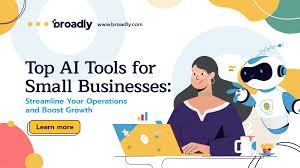
Best AI Tools for Small Businesses

Artificial Intelligence (AI) is transforming the way small businesses operate, offering automation, efficiency, and cost-saving solutions. Whether you’re managing social media, handling customer service, or streamlining operations, AI tools can give you a competitive edge. Here are some of the best AI tools for small businesses, along with direct links for easy access.

ChatGPT – AI-Powered Content Creation

ChatGPT helps businesses generate high-quality content, including blog posts, product descriptions, and customer responses. This tool is ideal for small businesses looking to enhance their content marketing without hiring a full-time writer.

Jasper – AI Copywriting Assistant

Jasper (formerly Jarvis) is an AI-driven writing assistant that helps businesses create persuasive sales copy, ad campaigns, and SEO-friendly blog content. It offers templates and tone customization for better brand consistency.

Canva – AI-Enhanced Design Tool

Canva’s AI-powered tools simplify graphic design for social media, presentations, and marketing materials. With user-friendly templates and automated design suggestions, it’s perfect for small businesses without a dedicated designer.

Grammarly – AI Writing Assistant

Grammarly improves writing quality by checking grammar, spelling, and tone. It helps small businesses craft professional emails, social media posts, and website content without errors.

Pictory – AI Video Creator

Pictory allows businesses to transform text into engaging videos, making it easier to create social media content, promotional videos, and tutorials with minimal effort.

Zapier – AI Workflow Automation

Zapier connects different business apps and automates repetitive tasks, such as email follow-ups, social media posting, and lead generation, improving efficiency.

Hootsuite – AI-Powered Social Media Management

Hootsuite’s AI capabilities help schedule posts, analyze engagement, and optimize social media strategy, making it an essential tool for businesses managing multiple platforms.

HubSpot – AI CRM and Marketing Automation

HubSpot’s AI-powered CRM offers lead tracking, automated email marketing, and customer support features, helping small businesses manage their relationships more effectively.

Tidio – AI Chatbot for Customer Support

Tidio provides AI-powered live chat and chatbots to automate customer support, respond instantly to queries, and improve customer satisfaction.

SurferSEO – AI SEO Optimization

SurferSEO helps small businesses optimize content for search engines by providing keyword insights, competitor analysis, and real-time SEO recommendations.

Conclusion

AI tools are revolutionizing how small businesses operate, providing cost-effective solutions for marketing, automation, and customer service. By integrating these AI-powered platforms, small businesses can save time, improve efficiency, and scale their operations effectively.

Stay ahead of the competition by leveraging these AI tools to streamline your business processes and enhance productivity.


Effortless Website Magic: Use Wixto Create Beautiful Websites

In our fast paced digital world having a website that is functional is no longer optional instead, it is a necessity. Whether you are an entrepreneur or a small business owner, having a website can really elevate your business entirely. With that being said, Wix is the next big thing in the digital world of websites. It is a platform that encourages everyone to build a beautiful and high-performing website.

Why Wix?

As this is a website that is all inclusive, here’s why it is the next best thing for you and your business

User friendly – Wix is surprisingly user friendly as it makes it so much easy for people who know little to nothing about technology create and launch a professional website quickly, which is a feature that most ecommerce-focused website builder platforms, like Shopify and WooCommerce, have in common. Wix’suser-friendliness ranks higher than that of many other platforms, especially for those who are new to web design.

SEO Support – These days, success is not onlyassured by a pretty website you also need to encourage store traffic. To help online merchants increase their visibility and boost sales, Wix does provide a range of in-house solutions. You can use SEO Wiz, an optimisation tool to examine your website and execute the recommended changes to increase its discoverability.’

Personalisation – Even though you must use a template to create your Wix website, you still have a lot of customisation choices. Almost every element of your website is editable, including the layouts, content and images.

Additionally, you can use the Wix App Market if the template doesn’t already have any features. The following features can be added to your website by the apps that are available through the market: 

Forms

Bookings

Picture galleries

Chat

SEO

These are both free and commercial apps available in the App Market that offer a lot more options for personalising and modifying your website.

A very safe website  Data security and protection must be given much more priority when running an e-commerce website than when running a content-driven website. You are a prime target for hackers because your store will be receiving extremely sensitive financial data. Regardless of the bundle you choose, Wixprovides enterprise-grade security for all websites created on its platform. Threat protection, 24-hour monitoring, HTTPS for all domains, and quick action in the event that your site goes down are all included in this. 

Cost and Customer Service – Wix’s free plan is one of its most notable features. If you’re simply considering creating a website and aren’t prepared to make a commitment to some of the more costly packages offered by other companies or even Wix itself, this can be perfect. Remember that the free edition lacks support for the essential e-commerce feature of payment acceptance and has restricted functionality. To set up a shop-front for an e-commerce company, you must upgrade to at least the Business Basic plan.

Conclusion 

Wix is one of the several systems designed to make the process of creating a website quick and easy. In the end, it’s a content-first web design platform with the ability to expand to e-commerce features. It’s a great option for content-driven companies who also need to add a small e-commerce site. Wix may also prove to be an affordable option for store owners that have little inventory, tight finances or no intentions to expand the amount of SKUs or sales channels they offer.


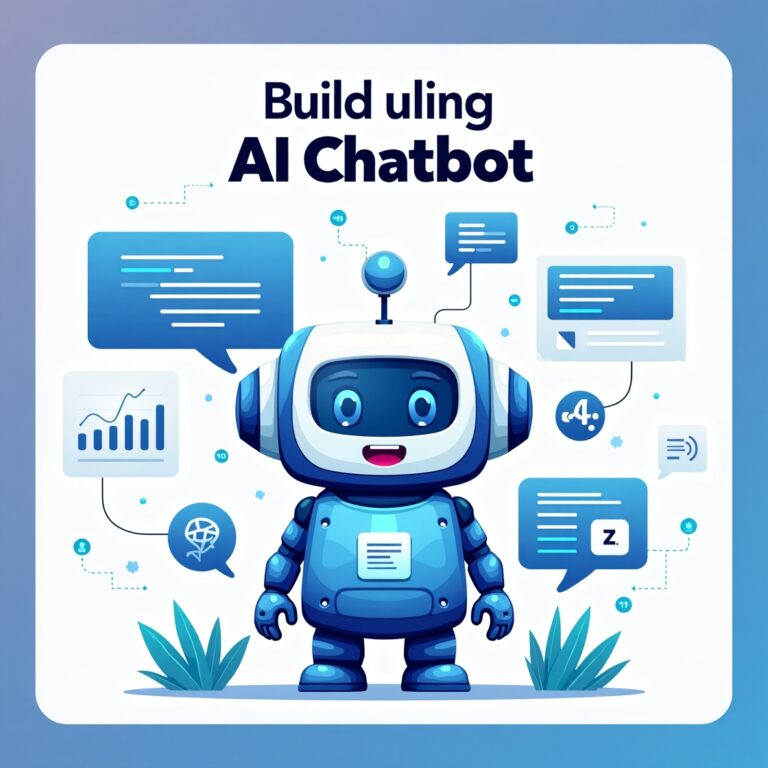
How to Build an AI Chatbot: A Step-by-Step Guide

I

AI chatbots are transforming how businesses engage with customers, offering 24/7 support, automating tasks, and improving user experience. Whether you’re looking to enhance customer service, generate leads, or drive sales, building an AI chatbot can significantly boost efficiency. In this guide, we’ll explore the essential steps to develop a chatbot using artificial intelligence.

Define Your Chatbot’s Purpose

Before diving into development, it’s crucial to outline your chatbot’s purpose. Ask yourself: What problem will it solve? Will it handle customer support, process orders, or provide product recommendations? Identifying the chatbot’s goal will help determine its conversation flow and integration needs.

Additionally, consider your target audience and the platforms where the chatbot will be available. Popular options include websites, WhatsApp, Facebook Messenger, and mobile apps. Understanding your audience’s preferences will help tailor the chatbot’s responses for maximum engagement.

Choosing the Right AI Framework

Selecting the right AI framework is a critical step in chatbot development. Several platforms offer robust artificial intelligence and natural language processing (NLP) capabilities:

  • Google Dialogflow – User-friendly and ideal for businesses seeking a quick AI chatbot solution.
  • Microsoft Bot Framework – A powerful choice for enterprise applications.
  • IBM Watson Assistant – Provides advanced AI-driven responses for complex queries.
  • Rasa – An open-source framework suitable for developers who want full control over their chatbot’s behavior.

The choice of framework depends on your technical expertise, scalability needs, and the level of AI sophistication required.

Designing the Conversation Flow

A well-structured conversation flow ensures that the chatbot delivers a seamless user experience. Start by defining the chatbot’s greetings, user inputs, and responses. Map out different interactions, including common queries, follow-ups, and fallback messages when the chatbot doesn’t understand a request.

To enhance engagement, incorporate conversational AI features such as personalized responses, contextual understanding, and sentiment analysis. These features help make the chatbot feel more human-like and improve user satisfaction.

Training Your Chatbot with AI and NLP

To make your chatbot truly intelligent, it must be trained with machine learning and NLP. Training involves feeding the chatbot with real-world conversations, enabling it to recognize user intent and extract key details such as names, dates, or preferences.

AI-powered chatbots improve over time through machine learning. Regularly updating the chatbot with new training data helps refine its accuracy and ensures it remains relevant to user needs.

Integrating and Deploying Your Chatbot

Once trained, your chatbot needs to be integrated into your preferred platforms. You can use:

  • No-code chatbot builders – Ideal for beginners (e.g., Chatfuel, ManyChat).
  • API and custom coding – For developers using Python, Node.js, or JavaScript.
  • CRM and eCommerce tools – Integrate with platforms like HubSpot, Shopify, and WhatsApp Business.

Testing the chatbot before deployment is essential. Conduct user simulations, check for errors, and refine responses to improve accuracy.

Monitoring and Optimizing Chatbot Performance

After launching your chatbot, continuous monitoring is crucial to ensure optimal performance. Track key metrics such as engagement rate, response accuracy, and conversion rates. Use analytics to identify areas for improvement and update the chatbot’s responses based on real user interactions.

Additionally, leverage artificial intelligence features like sentiment analysis and predictive analytics to further enhance chatbot efficiency. A well-optimized chatbot not only improves customer interactions but also contributes to business growth.

Conclusion

Building an AI chatbot requires careful planning, the right AI framework, and ongoing training. By following this step-by-step guide, you can develop a chatbot that meets your business goals while providing an excellent user experience.

Ready to build your AI chatbot? Start today and enhance your customer engagement with AI-driven automation!

Read The Impact of Artificial Intelligence on Education

Nonhlanhla Ndlovu Nonhlanhla Ndlovu As a dedicated multimedia journalist with a journalism qualification and extensive experience at Independent Media, I am passionate about crafting impactful stories that inform, engage, and inspire. My career has spanned prominent roles at The Star, Pretoria News, and Independent Media, where I developed a reputation for delivering high-quality, accurate, and engaging content across diverse platforms. LinkedIn Muck Rack

Crack the Code: How to Create a Successful Dropshipping Company on Shopify in 2025

Shopify describes dropshipping as a business model where items bought from an online store are shipped directly to customers by the supplier or manufacturer.

We all know that the e-commerce business is forever evolving, with that being said – creating a more successful Shopify website in 2025 involves more than just showcasing products, it also means creating a distinctive brand and the secret to this is a well thought or put together strategic plan. Regardless of whether you may be new to Shopify dropshipping or a well experienced person, point remains, you have to be smart about it so you can actually benefit from the whole thing.

Here are some tips on how to start a successful dropshipping company that generates a lot of income.

1. Find your Niche – finding winning products can be made easy by just knowing your target market. One should also know how to research markets, identifying customer complaints, take into account your own personal interests and look for products with high demand and low competition, use market research tools to analyse data on potential niches. Not forgetting that focusing on finding a niche with passionate customers and a unique product offering is one of the keys to a successful website.

2. Your Shopify website should be eye-catching – this will help your website attract more consumers and more consumers simply mean more income.One needs to easily navigate the system so it’s better to use, it needs to be fast and appealing to the eye, the consumer should love what they see. It is also important to make sure that your website looks good on all electronics as people use phones for their consumption.

3. Dependable suppliers –  this whole cycle really depends on finding suppliers that you trust and rely on as this can make or break your business.havethe ones that rank really high and have fast shipping as thus will help with deliveries getting to the consumers on time.  Platforms like AliExpresscan help in that department.

4. Market your business – in this business zero marketing simply means that zero sales.in order for you to grow your business you need to market it well and find the one tool that works for you. Social media ads, email marketing and influencer marketing are one of the few that can be used.

5. Incorporate AI – dealing with any business requires help and now we have the privilege of technology so a person can use that to their advantage so that they can work smarter and not harder. This will help in focusing on other things that will grow the business as well.

6. Prioritize your customers – in any business customers should and will always come first. Respecting your customers and putting their needs first might be the one thing that grows your business more. Make each and every process easy, always be transparent and always sell high quality products to win over their loyalty 

Conclusion

Smart strategies, quality suppliers, efficient marketing, and automation are key to building a successful Shopifydropshipping business in 2025. By putting these strategies into practice, you can create Shopify stores that not only exist but flourish! 

Are you prepared to transform your Shopify website into a lucrative machine? Get started now and see your dropshipping business take off!


The Impact of Artificial Intelligence on Education

Artificial intelligence (AI) is revolutionizing various industries, and education is no exception. From personalized learning experiences to automated administrative tasks, AI is reshaping the way students learn and teachers instruct. In this article, we explore the significant impact of AI on education and what the future holds.

Personalized Learning Experiences

Technology-assisted instruction in learning environments thus facilitates the delivery of instructions by presenting teaching materials in a manner and format that is suitable to the abilities and learning styles of individual students. Platforms like Khan Academy and Duolingo.

In implementing Lesson Study, the teacher is able to use the AI to evaluate the progress made by the students and adjust the lessons that aroSteps 10-20 this method helps students to be more interested and active when in class as well as helps them understand different courses better.

AI-Powered Tutors and Virtual Assistants

Thanks to the AI-driven chatbots and voice interfaces often referred to as virtual assistants, the students can get an academic assistance right away. AI tutors like Socratic by Google

include detailed instructions and guidelines so that in order to assimilate the information, a student may proceed through the source gradually. This is especially an advantage since many of the learners lack the opportunity of physical tutoring from teachers since they are in remote areas.

Automated Grading and Administrative Efficiency

Educational workloads concerns include, for example, time spent for grading and scheduling that are simplified by the use of an AI. Platforms like Grammarly perform collaborative work in grading written works with the ability to review assignments and identify the appropriate areas where students need to make corrections, and the corrections they need to make include issues such as grammatical and spelling issues and the structure of assignments. This automation means that the teachers are free to spend more quality time with the students and also ensure enough time on more active engagement with students.

Bridging Educational Gaps

AI closes learning loopholes by attending to the needs of learners in forms they understand and through languages they can understand better. Translation and transcription tools like the Google translate benefit the students with deficient English, providing materials in their native or desired languages make them have equal chance of learning.

Challenges and Ethical Considerations

However, the use of AI in education has its disadvantage such as violation of data privacy, and reduced social interaction. Schools should have appropriate measures taken regarding data privacy while at the same time seeking to integrate the system to support the conventional learning techniques employed in teaching.

Conclusion

The integration of AI in education presents numerous opportunities for enhanced learning experiences and administrative efficiency. As technology continues to evolve, educators and policymakers must embrace AI responsibly to maximize its benefits while addressing potential challenges.

What are your thoughts on AI in education? Let us know in the comments below!

For more insights on digital transformation and technology, stay tuned to our blog.

Nonhlanhla Ndlovu Nonhlanhla Ndlovu As a dedicated multimedia journalist with a journalism qualification and extensive experience at Independent Media, I am passionate about crafting impactful stories that inform, engage, and inspire. My career has spanned prominent roles at The Star, Pretoria News, and Independent Media, where I developed a reputation for delivering high-quality, accurate, and engaging content across diverse platforms. LinkedIn Muck Rack

The Perfect Guide to WordPressHosting, Websites & Builders you need in 2025!

WordPress is the simplest and most popular platform for creating websites or blogs. It powers over 43.6% of all websites online. This means that more than one in four websites you visit likely runs on WordPress. People love it because it’s easy to use and maintain. Plus, it’s free, making it a favorite among creatives. Many use it to write articles and connect with other creators.

Here are a few ideal hosting solutions 

Hostinger – Hostinger is a great choice for WordPress hosting because it’s reliable, fast, and affordable. Their LiteSpeed servers handle traffic efficiently and ensure consistent uptime. The platform is beginner-friendly, making setup easy, and their support team is always ready to help when needed.

Ionos – Is it a German internet server known for web hosting services? Yes, and it’s also recognized for its fast response times and affordability. Additionally, it offers a bundle that includes email hosting.

Bluehost  is way faster than the other hosting sites and it is more versatile because it has better plans than mostand it is far more reasonable with a lot of storage and unrestricted freedom and will to do more things. 

Kinsta – Now that we have the data, we can state with confidence that Kinsta is among the quickest WordPresssite hosts. Research shows that Kinsta is among the quickest managed WordPress hosting; its speed is incredible, actually, the uptime rate is around 99.99%.

And at the end of the day the best course of action will rely on the specific person or organisation.

The Best WordPress Website Builders

Oxygen – Oxygen is undoubtedly the best tool for building responsive WordPress websites. No other tool on the market offers the same level of control over how a website looks on every device. With the Oxygen WordPress plugin, you can design your entire site visually—from top to bottom—without needing to know any code.

Visual Composer  Visual Composer Website Builder is a live frontend drag-and-drop editor for WordPress. It lets you build pages and manage content with ease. Thanks to its user-friendly interface, both beginners and experts—like web developers and agencies—can use it to create websites for their businesses or clients.

Divi  Divi is well worth the time and financial commitment if you want to create a large number of WordPress websites. Those seeking an easy and affordable approach to create their first website should certainly start by searching elsewhere, it can sometimes be a little bit pricey than most.

Divi is a contemporary drag-and-drop visual website builder for WordPress that requires no programming. It allows you to create beautiful websites from the ground up without having to do any work.

Elementor – Elementor enables you to personalise your website, allowing you to construct a custom website with distinct layouts for blogs, portfolios or testimonials. It offers elements like custom post kinds, custom code and flexible CSS options. You can even add custom HTML, CSS or JavaScript for advanced functionalities

Different consumers consume different things but it I always easier when one has multiple options.

Conclusion 

There are many different web hosting options available, so website owners should be sure that the one they choose will meet their needs and objectives. Managed web hosting is a great way to lower the cost of an organization’s internal IT staff while also eliminating the headache of personally managing a website’s infrastructure.

Read The Most Reliable Hosting Services in 2025!

Ricki Malatji skilled content writer who creates engaging, SEO-friendly articles on diverse topics. With a talent for simplifying complex ideas, [Your Name] delivers clear, impactful content that connects with readers. Passionate about storytelling and staying ahead of trends, [Your Name] thrives on crafting pieces that inform and inspire. LinkedIn

What is the future of AI and Machine Learning?

Artificial intelligence (AI) technology, developed in the 1950s, enables computers and machines to mimic human intelligence and problem-solving tasks. As we look ahead, the future of AI and medical learning holds immense potential, promising to revolutionize how we diagnose, treat, and understand complex health conditions. By integrating advanced algorithms and vast datasets, AI is poised to transform the medical field, making it more efficient, accurate, and accessible for patients and practitioners alike.

Machine learning (ML) is a branch of artificial intelligence (AI) focused on enabling computers and machines to imitate the way that humans learn, to perform tasks autonomously, and to improve their performance and accuracy through experience and exposure to more data.

AI programs are designed to simulate human perception and understanding. These systems are capable of adapting to new information and responding to changing situations. Machine learning has been used for various scientific and commercial purposes including language translation, image recognition, decision-making, credit scoring, and e-commerce.

In this article we will delve into the progress of artificial intelligence and machine learning:

Progress in artificial intelligence

AI is a multidisciplinary field of computer science that aims to create machines and systems capable of performing tasks requiring human intelligence. It has applications in various fields, such as medical diagnosis, finance, robotics, law, video games, agriculture, and scientific discovery. However, many AI applications are not considered AI due to their widespread use. AI technology gained widespread use in the late 1990s and early 2000s, but was rarely credited for its successes.

Current performance in specific areas

Artificial intelligence (AI) is a general-purpose technology with no consensus on its strengths and weaknesses. Moravec’s paradox suggests humans outperform machines in areas like physical dexterity. While projects like AlphaZero have generated knowledge from scratch, many require large training datasets.

Researcher Andrew Ng suggests that almost anything a typical human can do with less than one second of mental thought can be automated using AI. Games provide a high-profile benchmark for assessing progress, with many having a large professional player base and a competitive rating system.

AlphaGo, a 2016 game, demonstrated AI’s competitive edge over humans, while games of imperfect knowledge present new challenges in game theory. E-sports continue to provide additional benchmarks, with Facebook AI and Deepmind engaging with the StarCraft franchise.

In the 1990s, machine learning (ML) emerged as a distinct field, shifting its focus from artificial intelligence to practical problem-solving, adopting methods from statistics, fuzzy logic, and probability theory, rather than relying on symbolic approaches.

Data compression

Machine learning and compression are closely connected, with optimal data compression using arithmetic coding and prediction using a compressor. Data compression serves as a benchmark for general intelligence, as compression algorithms map strings into feature space vectors, and compression-based similarity measures compute similarity within these vector spaces. Three representative lossless compression methods, LZW, LZ77, and PPM, are examined for feature vectors.

Data compression reduces file size, improves storage efficiency, and speeds up transmission. K-means clustering partitions datasets into clusters, reducing size and preserving core information. This algorithm is beneficial in image and signal processing, reducing storage space.

Data mining

Machine learning and data mining are closely related but differ in their focus. Machine learning focuses on prediction based on known properties, while data mining focuses on discovering previously unknown properties in data. Both fields have separate conferences and journals, with machine learning focusing on reproducing known knowledge and data mining on discovering previously unknown knowledge. Machine learning also has ties to optimization, as many learning problems are formulated as minimization of a loss function on a training set of examples.

Generalization

Characterizing the generalization of various learning algorithms is an active topic of current research, especially for deep learning algorithms.

Statistics

Machine learning and statistics are closely related but distinct in their primary goal. Statistics draws population inferences from a sample, while machine learning finds generalizable predictive patterns. Machine learning is not built on a pre-structured model but shapes it by detecting underlying patterns. Leo Breiman distinguished two statistical modeling paradigms: data model and algorithmic model, with algorithmic models involving machine learning algorithms like Random Forest.

Conclusion

The future of AI and machine learning is expected to see significant advancements in areas like personalized experiences, advanced automation, improved healthcare diagnostics, autonomous systems, natural language processing, and the development of more robust and explainable AI models, with potential impacts on nearly every industry sector, leading to increased efficiency and innovation.

Read How AI is changing health care: The future of medical innovation

Nonhlanhla Ndlovu Nonhlanhla Ndlovu As a dedicated multimedia journalist with a journalism qualification and extensive experience at Independent Media, I am passionate about crafting impactful stories that inform, engage, and inspire. My career has spanned prominent roles at The Star, Pretoria News, and Independent Media, where I developed a reputation for delivering high-quality, accurate, and engaging content across diverse platforms. LinkedIn Muck Rack

Ways to create a brilliant website for your business 

Having brilliant website ideas for your business in this day and age is not only mandatory but also one of the most important things one can do for their business. Every successful business concept needs and deserves a brilliant website.

Even though creating a website used to be a difficult, costly, and time-consuming procedure, those days are long gone now. Regardless of your level of IT expertise or lack of intense training, anyone can now create a website with brilliant website ideas for your business that stands out and drives success.

With the help of other business owners, the internet and YouTube videos, one can create their website in a day. Here’s how:

Pick a Template 

Start by looking for the best possible websites that resonate with the idea of your own business. You will get some ideas from this before making your own.

When selecting a template, look over the many categories carefully to determine which one best suits your persona and business objectives. You should think about the style and feel that you want your particular business website to convey, regardless of whether it’s a tech start-up website, a construction firm website, or something else entirely.

The most crucial sites and features that would help your company should also be taken into account. This is how you know you will be able to make the best decision regarding the start-up of your business website.

Decide on a web host and domain name

This is how other people will recognize your business and website so think carefully. The name should be easy to write and spell but most importantly, it should be eye-catching so it attracts more people.

You need to get a domain name, also referred to as your website address.this will help you link it to your hosting company. Choosing a powerful domain name will increase brand awareness and convey credibility to your company website. For consistency, it should ideally match the name of your company. Be unique and consistent but also keep it short.

Design your website 

Customers’ perceptions of you and your business will be influenced by an effective website design. Additionally, improving the user experience can increase customer satisfaction and have a favourable impact on the website’s traffic and conversion.

After making changes to your website, see how it appears in real time. Check how it looks and scrolls or works in the browser. Verify it with every possible screen resolutions to see how it works, especially with your phone as many people tend to overlook this step. Make sure that everything is accessible and legible, make sure the contents are also relatable.

Optimize for SEO

SEO is the process of making sure that websites rank highly using natural queries. Rebecca Thomas once said that “the higher you rank in search, and the more keywords you rank for, the greater your visibility, traffic and potential for conversations or sales,”. This also means that one should always stick to the relevant keywords and improve their website’s performance.

Fill your site with the relevant content

This will help even with the consumer consumption. In addition to encouraging users to return, having high-quality, regularly updated content on your website lets search engines know that it has current information.

Take into consideration the following types of content when you begin to think about adding or creating content for your website that engages your target audience and increases traffic:

How to engage with your consumers

Answer frequently asked questions

Analyse what people are reading and what they are saying about your website.

Read The Most Reliable Hosting Services in 2025!

Include a privacy policy

Businesses are required by law in many nations to declare the ways in which they gather, manage, and process visitor data. As a result, consumers are now more cautious about how businesses use their personal information.

Writing a privacy policy for your website that explains how and why you collect visitor information is so essential. Having open and honest communication with your users will build trust. A cookie permission banner can also be installed.

Promote your website 

This can either be word of mouth, email marketing or even social-media marketing, one should find ways to always promote their business and their work, this will either bring in more consumers or grow the business. It is important because once you have developed a website for your firm, you will also have established a central location for all of your digital marketing endeavours.

Launch your website 

Last but not least, launch your website. Engage with the consumers while tracking the website’s performance 

Conclusion 

Creating a website for your business is one step closer to real growth and commitment, it sets a tone and sends the right message to your consumers. It suggests that your business has a strong online presence and in some cases it means that one is willing to take constructive criticism.

Are you ready to create the most brilliant website for your business? Comment down below

Ricki Malatji skilled content writer who creates engaging, SEO-friendly articles on diverse topics. With a talent for simplifying complex ideas, [Your Name] delivers clear, impactful content that connects with readers. Passionate about storytelling and staying ahead of trends, [Your Name] thrives on crafting pieces that inform and inspire. LinkedIn

How AI is changing health care: The future of medical innovation

Introduction

Artificial intelligence (AI) in healthcare refers to the use of AI technologies to analyze and interpret complex medical and healthcare data. In many cases, it enhances or even surpasses human abilities by offering faster, more accurate methods for diagnosing, treating, and preventing diseases.

Healthcare AI systems can analyze patterns in a patient’s medical history and current health data to predict potential health risks. By leveraging this predictive capability, healthcare providers can deliver proactive and preventive care. As a result, patient outcomes improve, and healthcare costs decrease.

AI algorithms can automate administrative tasks, prioritize patient needs, and improve communication within healthcare teams. As a result, healthcare providers can dedicate more time to direct patient care while ensuring efficient and well-coordinated service delivery.

Artificial intelligence enhances diagnostic capabilities in underserved countries. This progress is supported by technology companies like SpaceX and the Raspberry Pi Foundation, which expand access to computers and the internet, enabling broader adoption of AI solutions.

In this article we will delve into how AI is impacting the future of medical innovation:

Applications in healthcare systems:

Disease diagnosis

Accurate and early disease diagnosis remains a significant challenge in healthcare. Identifying medical conditions and their symptoms is a complex task. However, AI can support clinicians by leveraging its advanced data processing capabilities, saving time and enhancing diagnostic accuracy.

By leveraging machine learning, artificial intelligence can significantly assist doctors in diagnosing patients through the analysis of vast electronic health records (EHRs). For instance, AI can enable early prediction of conditions like Alzheimer’s disease and dementia by examining large datasets of similar cases and potential treatments.

Electronic health records

Electronic health records (EHRs) are essential in the healthcare industry. AI algorithms analyze individual patient records to predict disease risks by evaluating personal and family medical history. Like human flowcharts, these algorithms establish rules that link specific observations to potential diagnoses, saving time and highlighting critical issues.

Drug interactions

Artificial intelligence algorithms now identify drug-drug interactions in medical literature, a significant concern for patients taking multiple medications at once. Machine learning algorithms extract details about interacting drugs and their potential effects from these sources. In 2013, the DDIExtraction Challenge—a standardized test for such algorithms—evaluated their ability to determine which drugs interact and the nature of those interactions.

Telemedicine

The rise of telemedicine has showcased the potential of AI in remote patient care. AI can monitor patient data through sensors, enabling wearable devices to detect subtle changes that humans might miss. By comparing this data with existing information using AI algorithms, physicians can receive alerts about potential issues. However, AI applications like chat-bot therapy face criticism, particularly in mental healthcare, for lacking reciprocity and accountability.

Read The Influence of Artificial Intelligence on Business & Healthcare in 2025!

Clinical applications:

Cardiovascular

Artificial intelligence (AI) algorithms show promise in diagnosing and risk-stratifying patients with coronary artery disease. They can predict mortality, medication effects, and adverse events effectively. Wearables, smartphones, and internet-based technologies also enable continuous monitoring of cardiac data, potentially allowing earlier detection of cardiac events outside hospitals. Additionally, AI aids in classifying heart sounds and diagnosing valvular disease. However, challenges remain, such as limited data availability for training machine learning models, including social determinants of health.

Dermatology

Medical imaging, such as X-rays and photography, is widely used in dermatology, and deep learning has advanced image processing capabilities. Machine learning shows potential for improving diagnostic accuracy by analyzing images. For example, studies demonstrate its ability to detect keratinocytic skin cancer from facial photographs and classify skin cancer from lesion images at a level comparable to dermatologists. However, concerns persist about its failure to address disparities related to skin color or the differential treatment of patients with non-white skin tones.

Gastroenterology

AI can significantly enhance gastroenterology by enhancing endoscopic procedures like esophagogastroduodenoscopies and colonoscopies, enabling quicker disease identification and severity determination. Early trials have shown sensitivity similar to expert endoscopists. AI can also help doctors treat ulcerative colitis by detecting microscopic disease activity and predicting flare-ups. An AI-powered tool can distinguish between samples with remission of colitis and those with active disease, and predict flare-up risk with similar accuracy, similar to the accuracy of pathologists.

Obstetrics and gynaecology

Artificial intelligence utilises massive amounts of data to help with predicting illness, prevention, and diagnosis, as well as patient monitoring. In obstetrics, artificial intelligence is utilized in magnetic resonance imaging, ultrasound, and foetal cardiotocography. AI contributes in the resolution of a variety of obstetrical diagnostic issues.

Conclusion

The increasing amount of medical data, including clinical, genomic, and imaging data, is expected to accelerate as precision and personalization in medicine mature. This trend is leading to a more data-dependent future in medicine, with medical schools strengthening their technology curricula. AI will analyze vast amounts of data, assisting physicians in analyzing patient records and improving the human touch. While AI is unlikely to replace physicians, medical professionals must learn AI technology and its benefits.

Nonhlanhla Ndlovu Nonhlanhla Ndlovu As a dedicated multimedia journalist with a journalism qualification and extensive experience at Independent Media, I am passionate about crafting impactful stories that inform, engage, and inspire. My career has spanned prominent roles at The Star, Pretoria News, and Independent Media, where I developed a reputation for delivering high-quality, accurate, and engaging content across diverse platforms. LinkedIn Muck Rack